

Presidents of the Supreme Courts of the European Union discuss challenges to the rule of law and rights in the digital environment
15 June, 2026
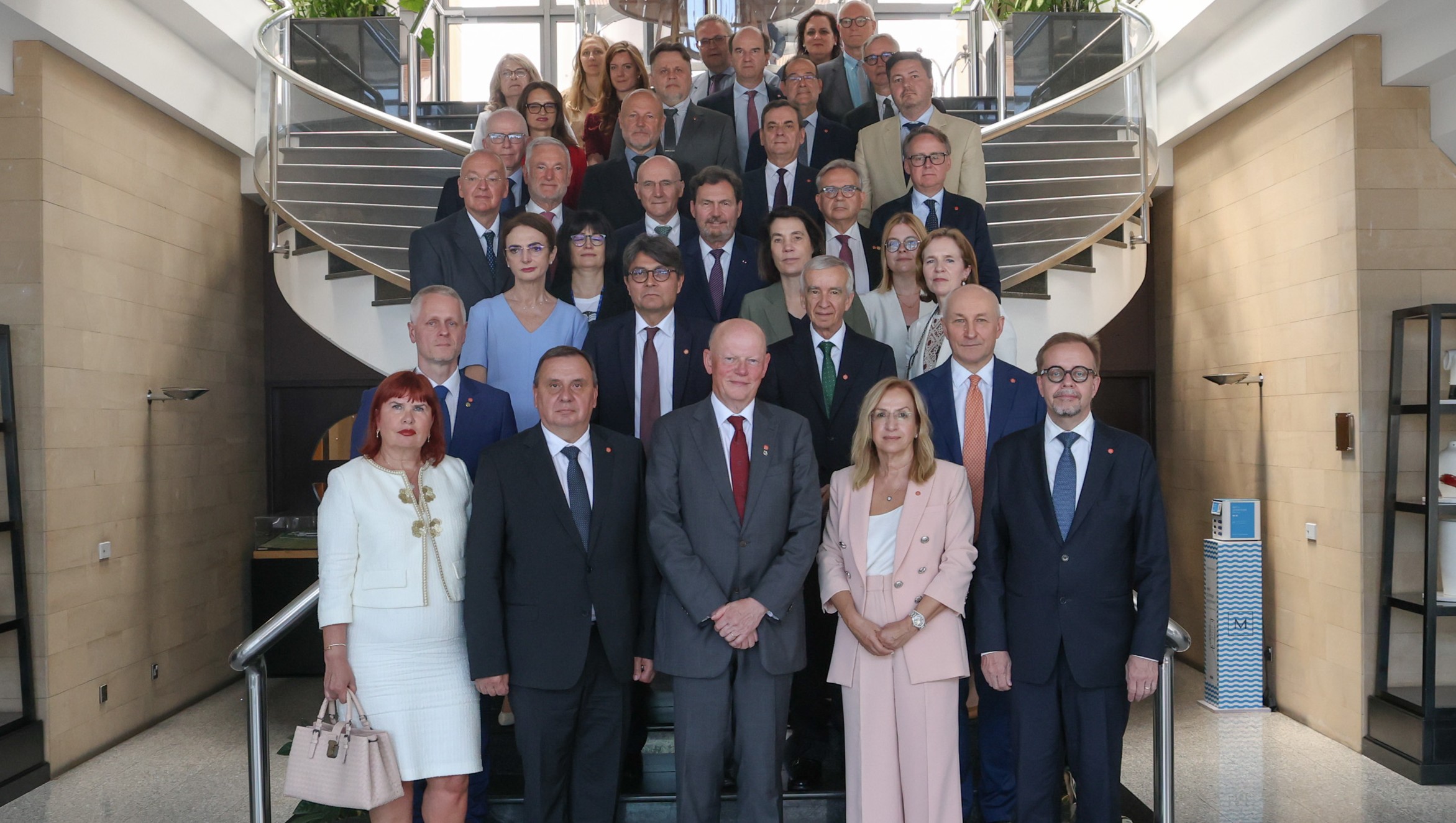
© The Cyprus Presidency of the Council of the EU 2026
On 12 June, the Network of the Presidents of the Supreme Judicial Courts of the European Union held its annual conference, which took place in Cyprus. The conference was organised by the Supreme Court of Cyprus in cooperation with the Secretariat of the Cyprus Presidency of the Council of the EU 2026. The conference was attended by members, associate members and observers of the Network, as well as representatives of the Court of Justice of the European Union, the European Court of Human Rights and the Supreme Court of Canada. The Supreme Court of Latvia was represented by its President, Aigars Strupišs.
The conference programme comprised two working sessions, during which participants discussed issues of current relevance to supreme courts.
The conference opened with a working session entitled ‘The Rule of Law: Challenges in the 21st Century’, chaired by Donal O’Donnell, Chief Justice of Ireland and President of the Network of Presidents of the Supreme Judicial Courts of the European Union. Opening remarks were delivered by Tatu Leppänen, President of the Supreme Court of Finland; Síofra O’Leary, former President of the European Court of Human Rights; Maciej Szpunar, First Advocate General at the Court of Justice of the European Union, and Richard Wagner, Chief Justice of Canada.
Following the presentations, the participants discussed the most pressing challenges to the rule of law in Europe and beyond, and the extent to which these challenges are reflected in their own judicial systems. The participants discussed whether supreme courts should take on a broader role in safeguarding the rule of law, going beyond the mere deciding of individual cases. Finally, participants discussed what lessons can be learnt from countries where democracy or the rule of law has been eroded, and how to restore the rule of law and public trust in institutions.
The second working session, ‘Protecting individuals’ rights in the digital sphere – the impact of the Digital Services Act, was chaired by Danguolė Bublienė, President of the Supreme Court of Lithuania, who, together with Savvas S. Papasavvas, Vice-President of the General Court of the European Union, delivered opening remarks on the session’s theme.
In her presentation, Danguolė Bublienė discussed the application of the Digital Services Act (DSA) in judicial proceedings and its impact on the protection of individuals’ rights online. The report assessed the development of the EU legal framework from the e-Commerce Directive to the Digital Services Act, highlighting the shift towards a more protective, user-oriented approach. The report examined the meaning of the broad notion of ‘illegal content’ and how it is understood across jurisdictions, the distinction between ‘illegal’ and ‘harmful’ content and its implications on freedom of expression, as well as whether a prior criminal conviction is required for content to be considered illegal.
During the discussions, participants debated whether a uniform interpretation of the DSA could be expected across the European Union, particularly with regard to the concept of illegal content, and what role national supreme courts should play in establishing common standards for the application of the DSA throughout Europe. Conference participants also discussed whether equating harmful and illegal content could lead to excessive restrictions on lawful content. Finally, it was explained how the judicial system should respond if illegal or harmful information about the courts is published, and what measures courts themselves might take to address such content effectively.
At the closing of the conference, Donald O’Donnell emphasised that international cooperation and dialogue between Europe’s supreme courts is now more important than ever – at a time when the rule of law is facing serious challenges across the globe.
The Network of the Presidents of the Supreme Judicial Courts was created in 2004 by the Presidents of the Supreme Judicial Courts of the European Union. Its Members are the Presidents of the Supreme Judicial Courts of the EU Member States. In addition, Iceland, Liechtenstein, Norway and the United Kingdom participate as Associate Members, and Albania, Montenegro, Serbia and Ukraine as Observers.
Information of the Network of the Presidents of the Supreme Judicial Courts of the European Union
Photo: The Cyprus Presidency of the Council of the EU 2026