

University of Latvia students learn about the work of the Supreme Court and its communication with the public
12 May, 2026
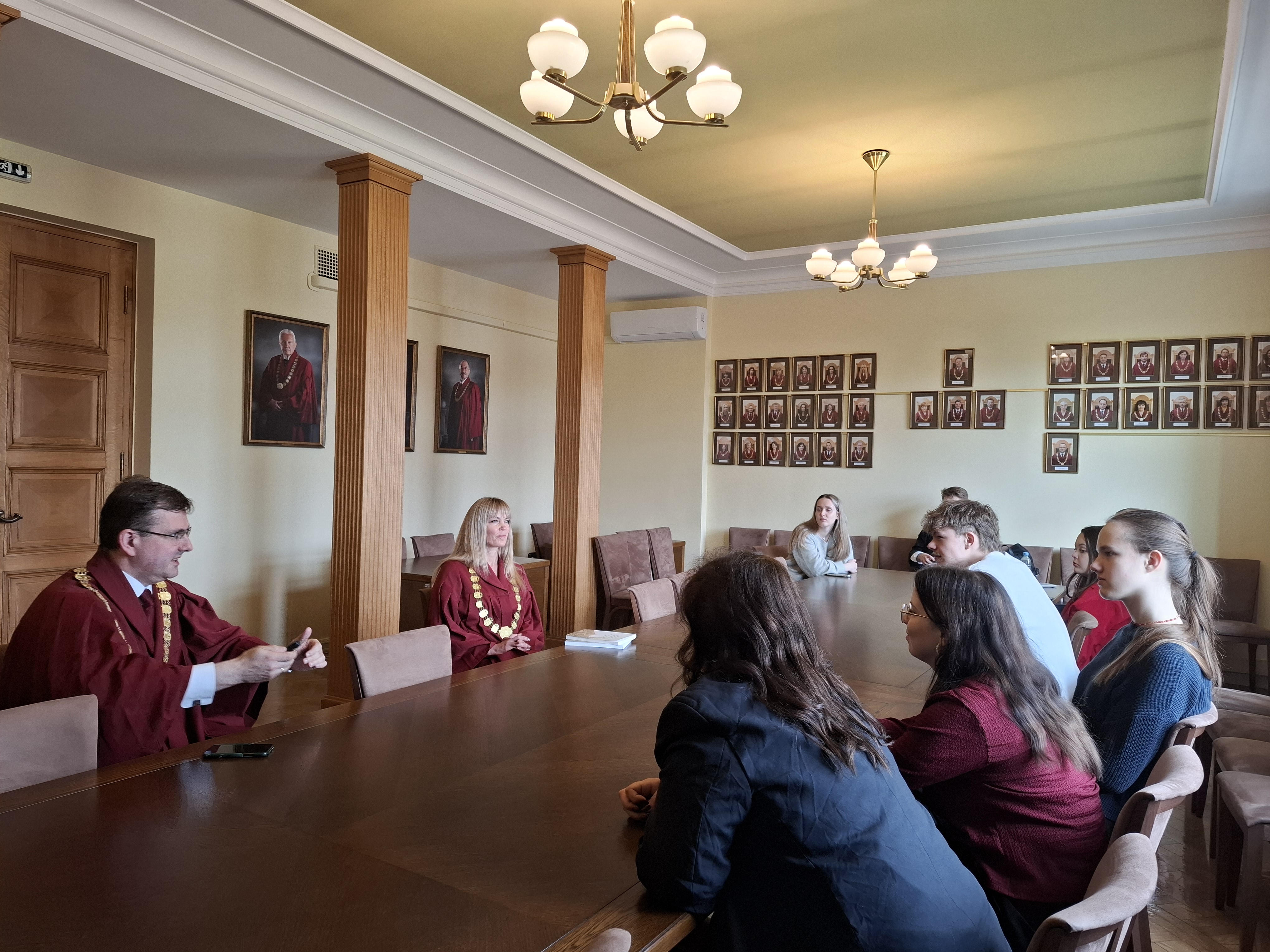
Senators Jānis Pleps and Diāna Makarova in a conversation with students
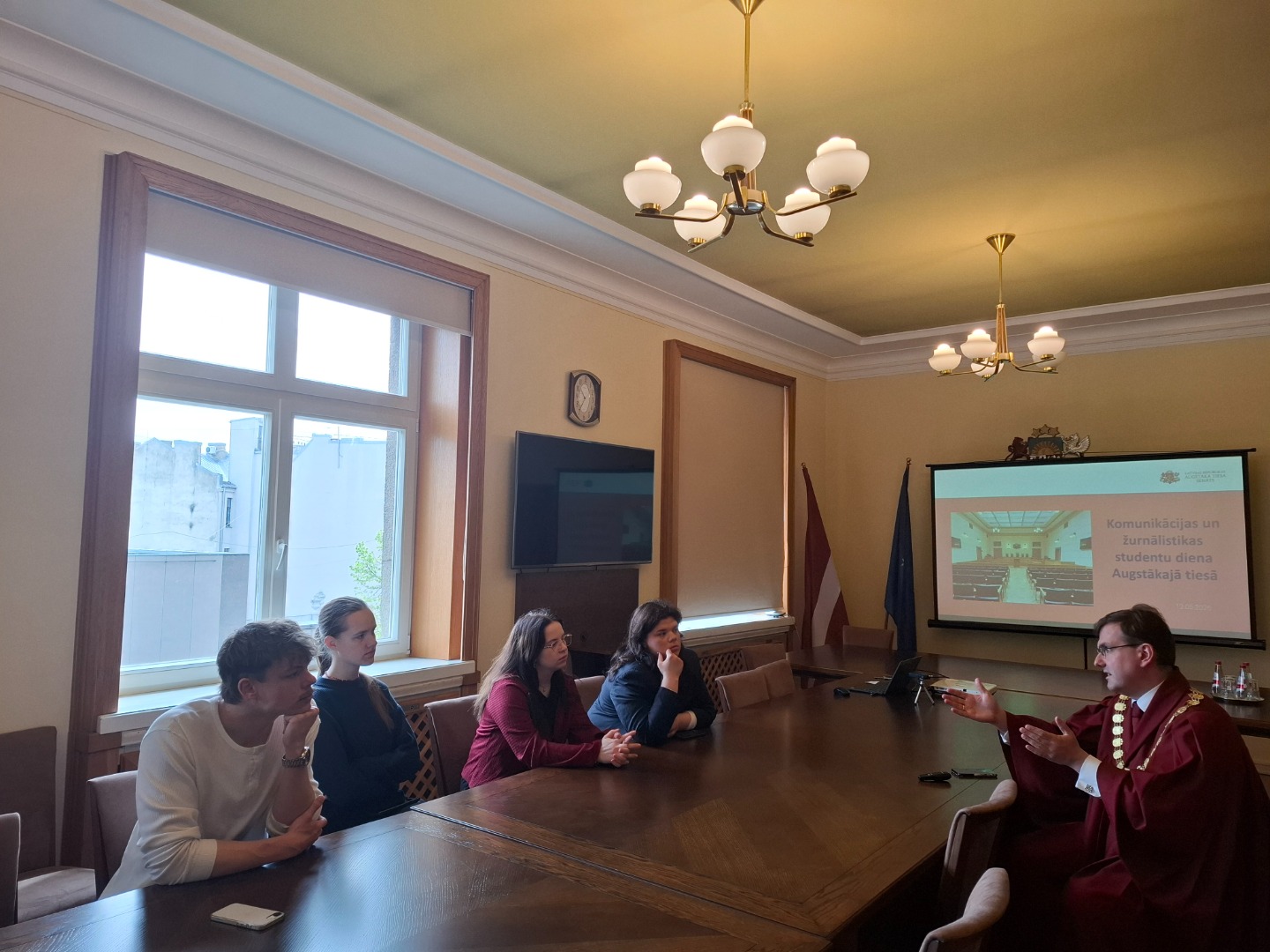
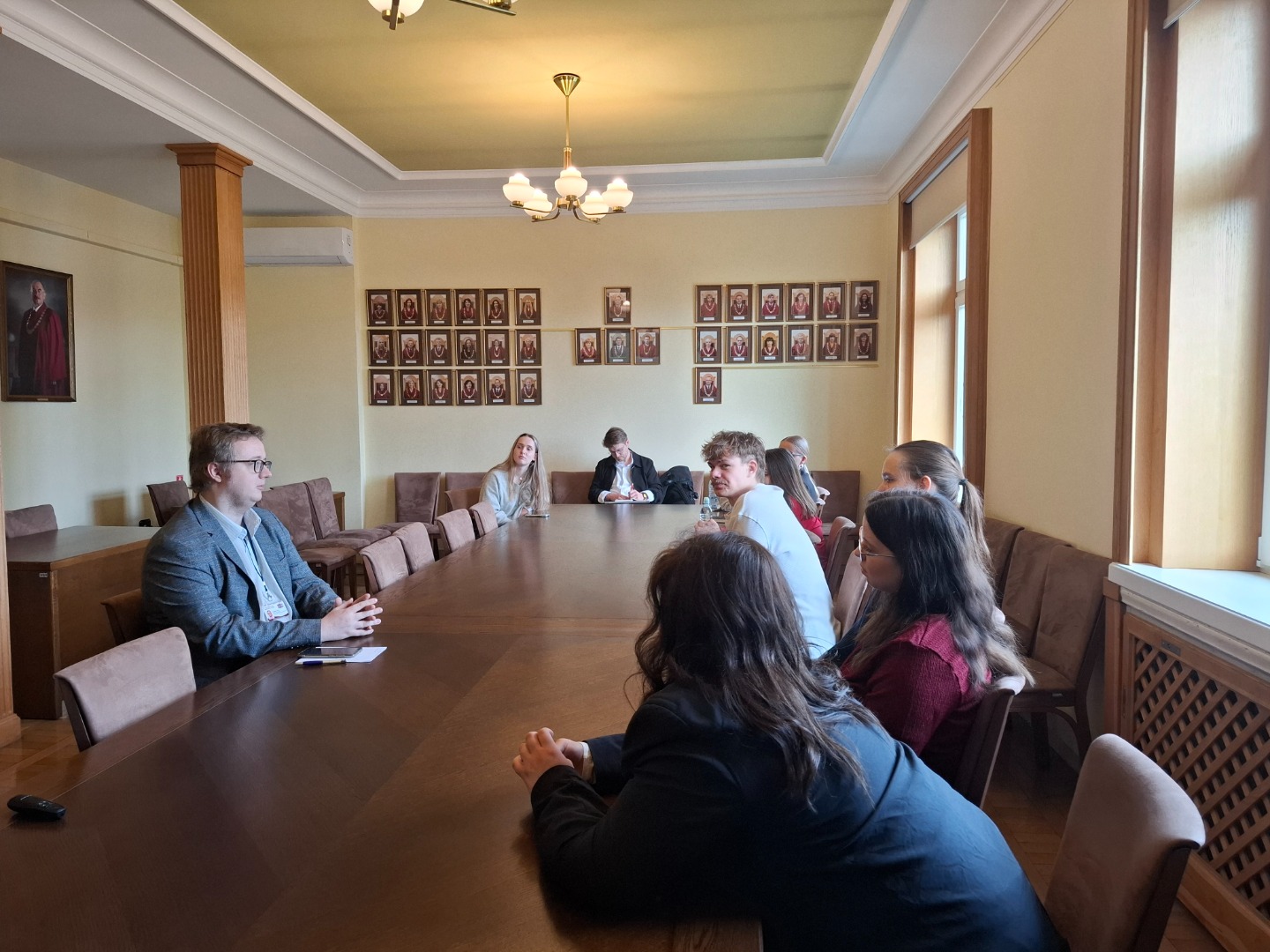
Viesturs Lācis, Adviser in the Matters of Senate Communication, speaks with students
On May 12, students of the University of Latvia’s “Reporter’s Workshop” course in communication and journalism visited the Supreme Court to gain insight into the work of the judicial system and the courts’ communication with the public. During the visit, the students met with Senator Jānis Pleps, Senator Diāna Makarova, who also serves as Chair of the Judicial Ethics Commission, and Viesturs Lācis, Adviser on Senate Communication Matters.
In his discussion with the students, Jānis Pleps, Senator of the Senate’s Department of Administrative Cases, highlighted the importance of legal literacy – namely, understanding one’s rights and obligations in order to protect them effectively. He also underscored the vital role journalists play in educating the public about legal issues and developments within the judicial system. Referring to the complexity of court rulings and legal terminology, the Senator stressed the importance of cooperation between journalists and court communication professionals to ensure that information about the courts is conveyed accurately and in a manner accessible to the public. Students also gained insight into the structure of Latvia’s judicial system, the profession of a judge, and the work of the Constitutional Court, the Court of Justice of the European Union, and the European Court of Human Rights.
Diāna Makarova, Senator of the Senate’s Department of Administrative Cases and Chair of the Judicial Ethics Commission, introduced the students to the Commission’s responsibilities, composition, and the Latvian Code of Judicial Ethics. She addressed issues related to judges’ communication with both the media and the public on social media, illustrating her points with examples from cases reviewed by the Commission. In its opinions, the Commission emphasizes that judges’ communication must remain appropriate, professional, and conducive to strengthening public trust in the judiciary. Regarding social media, she stressed that judges must exercise restraint and uphold especially high standards of responsibility, including in the digital environment.
Viesturs Lācis, Adviser in the Matters of Senate Communication, spoke about the Supreme Court’s communication with the media and the public, as well as his day-to-day responsibilities, which include gathering and preparing information on cases pending before the Senate. He explained the criteria used in selecting cases for press releases, described the nature of the Supreme Court’s ongoing cooperation with journalists and media outlets, and emphasized that legal literacy and the ability to interpret legal texts are particularly valuable for journalists seeking to provide accurate and high-quality coverage of current legal issues. These skills, he noted, help reduce misunderstandings in communication with courts and other legal professionals.
At the conclusion of the event, students toured the historic Palace of Justice and visited the Supreme Court Museum.
Baiba Kataja, Communication specialist of the Supreme Court
Telephone: +371 67020396; e-mail: baiba.kataja@at.gov.lv